
Path With Art: Exploring the Impact of Community Arts Programming on Trauma Recovery
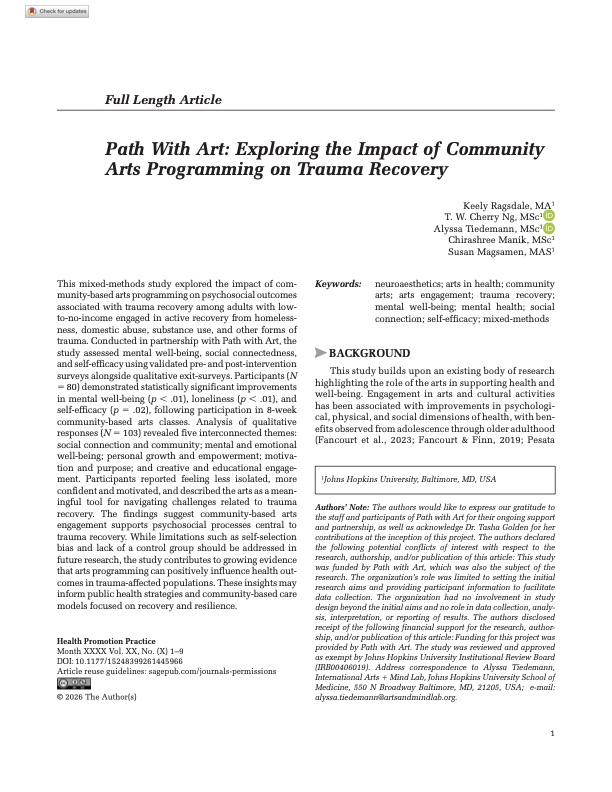
This mixed-methods study explored the impact of community-based arts programming on psychosocial outcomes associated with trauma recovery among adults with low-to-no-income engaged in active recovery from homelessness, domestic abuse, substance use, and other forms of trauma. Conducted in partnership with Path with Art, the study assessed mental well-being, social connectedness, and self-efficacy using validated pre- and post-intervention surveys alongside qualitative exit-surveys. Participants (N = 80) demonstrated statistically significant improvements in mental well-being (p < .01), loneliness (p < .01), and self-efficacy (p = .02), following participation in 8-week community-based arts classes. Analysis of qualitative responses (N = 103) revealed five interconnected themes: social connection and community; mental and emotional well-being; personal growth and empowerment; motivation and purpose; and creative and educational engagement. Participants reported feeling less isolated, more confident and motivated, and described the arts as a meaningful tool for navigating challenges related to trauma recovery. The findings suggest community-based arts engagement supports psychosocial processes central to trauma recovery. While limitations such as self-selection bias and lack of a control group should be addressed in future research, the study contributes to growing evidence that arts programming can positively influence health outcomes in trauma-affected populations. These insights may inform public health strategies and community-based care models focused on recovery and resilience.
This study builds upon an existing body of research highlighting the role of the arts in supporting health and well-being. Engagement in arts and cultural activities has been associated with improvements in psychological, physical, and social dimensions of health, with benefits observed from adolescence through older adulthood (Fancourt et al., 2023; Fancourt & Finn, 2019; Pesata et al., 2022). It is also increasingly being recognized as a health behavior (Rodriguez et al., 2024). Evidence synthesized by Fancourt and Finn (2019) suggests that arts engagement can support disease management and treatment, as well as contribute to broader health prevention and promotion practices. By addressing these interconnected dimensions of health, the arts offer a holistic approach to well-being.
Click Here to Read the Full Article
Art Therapy Cognitive Neuroscience Community IAM Lab Mental Health Music Neuroaesthetics Public Health WellbeingOther Featured Resources

Other Guides Resources